
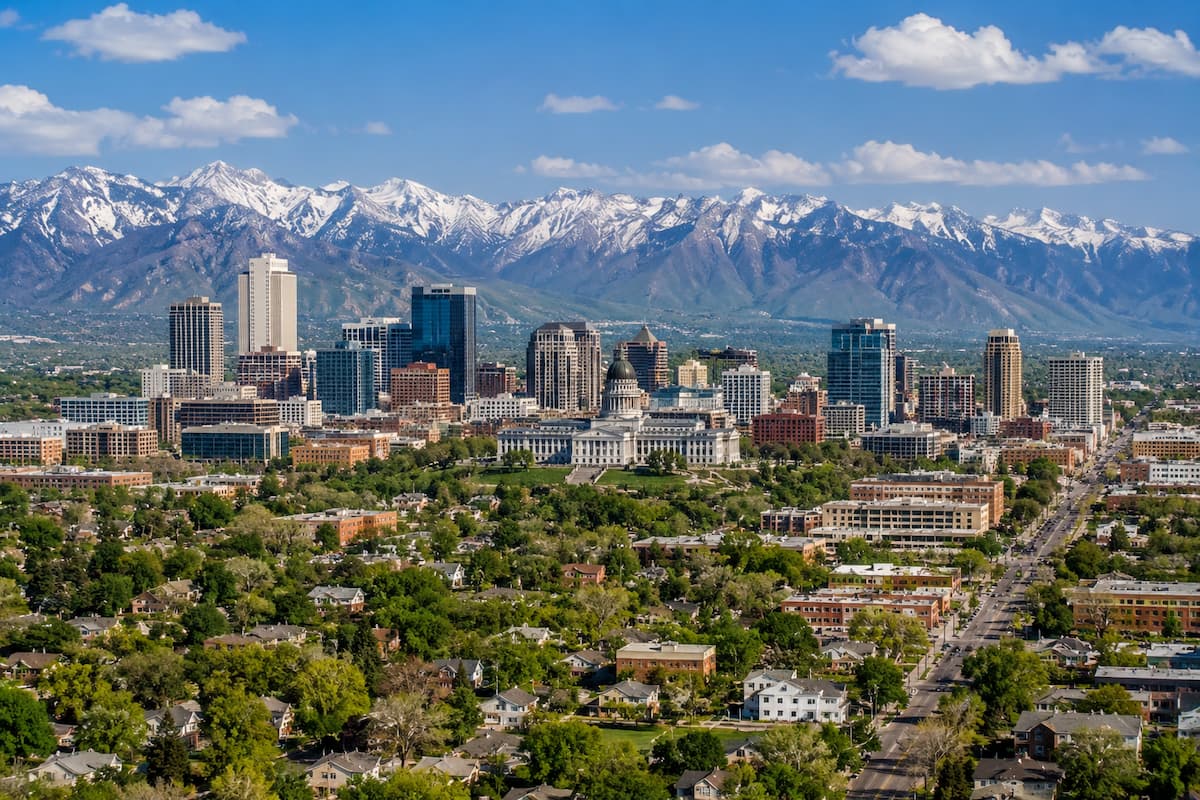
Ready to tap into the fastest-growing state in the country?
Utah is leading the nation in economic growth. In 2024, the state's real GDP grew by 4.5%, well above the national rate of 2.8%, and its nominal GDP surpassed $300 billion for the first time in history, closing the year at $308 billion. Statewide personal income grew 6.1%, ranking Utah fourth in the nation.
At the heart of that growth is Salt Lake City, which in 2025 ranked third among large metropolitan areas with the best economic performance according to the Milken Institute Best-Performing Cities Index. It was also named number one in ease of doing business out of more than 80 cities in North America by Arizona State University's Center for the Study of Economic Liberty. The Salt Lake City-Provo metro area generates a GDP of $311.2 billion, with a per capita GDP of $87,458.
Small businesses are the engine of this economy. According to the SBA's 2025 Utah profile, 371,569 small businesses operate in Utah, representing 99.4% of all businesses in the state and employing nearly half of the private-sector workforce. Between March 2023 and March 2024, small businesses accounted for 88% of net new job growth.
If you want to ride this momentum, securing the right financing is critical. In this guide, we walk you through the best small business loan options in Salt Lake City and the main requirements.
Let's explore them.
1. SBA Loans in Utah
The SBA District Office in Salt Lake City is one of the most important resources for entrepreneurs across the state. It offers all the main federally backed financing programs:
SBA 7(a): the most popular program. Up to $5 million for working capital, expansion, inventory, equipment, or refinancing.
SBA 504: financing for commercial real estate and high-value equipment, with terms of up to 25 years.
SBA Microloans: up to $50,000, distributed through nonprofit lenders. Ideal for startups and small family businesses.
SBA Disaster Loans: available to businesses impacted by wildfires, drought, floods, or other natural disasters.
SBA loans stand out for their competitive rates, long terms, and more manageable monthly payments. However, they require a solid credit score (generally 680 or higher), a detailed business plan, and in many cases collateral for larger loans. The process can take 30 to 90 days.
2. Mountain West Small Business Finance
Mountain West Small Business Finance is one of Utah's leading SBA 504 lenders and one of the most-used resources by local businesses for financing commercial real estate and long-term equipment.
Its most relevant features include:
Specialization in SBA 504 loans, with fixed rates at 10, 20, and 25 years.
Processes designed specifically for commercial property buyers in Utah, Idaho, Wyoming, and Nevada.
Expert guidance throughout the process, significantly reducing administrative burden for business owners.
This is an excellent option if your goal is to acquire a commercial property, expand your facilities, or invest in high-value equipment.
3. Utah Microloan Fund and Credit Unions
For entrepreneurs just getting started or those who don't qualify for traditional bank loans, the Utah Microloan Fund offers three different financing options, backed by institutions like Wells Fargo, Celtic Bank, Bank of America, and Merrill Lynch.
In addition, Utah has a very active credit union ecosystem:
Mountain America Credit Union, with commercial products and SBA loan experience.
America First Credit Union, one of the largest credit unions in the state.
Utah First Credit Union, an SBA Preferred Lender, with terms of up to 10 years for working capital, 15 for equipment, and 25 for real estate; loans of up to $5 million.
Deseret First Credit Union and Utah Community Credit Union, both offering full-service business banking.
Credit unions tend to offer more competitive rates, more flexible criteria, and more personalized service than large banks, though generally with lower maximum loan amounts.
4. Utah's Small Business Credit Initiative (USBCI)
Utah's Small Business Credit Initiative (USBCI) is a federal-state program with $69 million in funding designed to expand access to capital for small businesses across the state, with a special focus on underserved communities. The program is administered by the Utah Governor's Office of Economic Opportunity.
Some of its key features:
Works in partnership with approved banks, credit unions, and CDFIs.
Includes loan, guarantee, and equity participation programs.
Aimed at expanding financing access for women, minorities, and rural entrepreneurs.
Other important state resources include the Bridge Loan Program through Utah's state government, backed by $12 million in federal and private funds — ideal for businesses needing gap financing between other funding sources.
5. Zions Bank and Other Local Banks
Zions Bank, headquartered in Salt Lake City since 1873, is one of Utah's top SBA lenders by volume. With 122 branches across Utah, Idaho, and Wyoming, it offers service that's deeply rooted in the local economy.
Its products include:
SBA 7(a) and SBA 504 loans.
Business lines of credit.
Equipment and commercial real estate loans.
Specialized advisory for small and mid-sized businesses.
Other actively engaged banks in Salt Lake City include Wells Fargo, Bank of America, and Celtic Bank, all offering SBA and commercial products for small businesses.
6. Revenue-Based Financing in Salt Lake City
For Salt Lake City business owners who need fast capital without the bureaucratic barriers, revenue-based financing has positioned itself as an attractive alternative. Companies like One Park Financial offer this type of product in Utah.
Unlike a traditional loan, investors advance you capital and, in exchange, receive a small percentage of your sales until the amount is repaid. In other words, you pay at the pace of your actual revenue: when you sell more, you pay more; when you sell less, you pay less.
The advantages for Utah businesses are significant:
Speed: access from $10,000 to $1,500,000 in as little as 72 hours — ideal for businesses that need to respond quickly to market opportunities.
No collateral required: you don't need to put up personal or business assets.
You keep full control: no equity given up in your business.
Personalized guidance: a funding expert walks you through the process in English or Spanish.
To prequalify with One Park Financial in Utah, your business needs to meet these basic requirements:
Have been operating for at least three months.
Generate a minimum of $10,000 in monthly net revenue.
If you qualify, fill out our online form and prequalify today. A funding expert will reach out to design the best solution for your business.
Take advantage of Utah's economic leadership and grow your business with agile, flexible financing!
Disclaimer: The content of this post has been prepared for informational purposes only. It is not intended to provide and should not be relied on for tax, legal, or accounting advice. Consult with your tax, legal, and accounting advisors before engaging in any transaction.

Jonathan Jaimes
Senior Content Manager
One Park Financial's editorial team brings together funding specialists, business strategists, and small business advocates to create practical content for the entrepreneurs we serve.
.jpg)
.jpg)
.jpg)